" height="7.1149px" id="FTcukYt9G" width="2.46918px"/><path d="M 14.664 0 L 8.602 6.334 L 2.49 12.662 L 2.469 12.683 L 2.469 17.111 L 0 17.111 L 0 12.14 L 3.545 8.472 L 11.85 0 Z" fill="rgb(255, 255, 255)" height="17.111px" id="JEclOrOlY" width="14.6641px"/><path d="M 8.295 6.23 L 5.406 6.23 L 0 0 L 3.097 0 Z" fill="rgb(255, 255, 255)" height="6.230199999999998px" id="A32Do9AoF" transform="translate(6.839 10.88)" width="8.29483px"/><path d="M 9.924 1.295 C 8.952 0.432 7.57 0 5.776 0 C 4.739 0 3.748 0.143 2.801 0.428 C 1.854 0.713 1.044 1.125 0.369 1.662 L 1.357 3.422 C 1.867 2.998 2.492 2.66 3.233 2.407 C 3.974 2.155 4.731 2.029 5.505 2.029 C 6.673 2.029 7.55 2.301 8.134 2.847 C 8.718 3.393 9.01 4.164 9.01 5.157 L 9.01 5.622 L 5.258 5.622 C 3.958 5.622 2.925 5.793 2.16 6.135 C 1.394 6.477 0.843 6.934 0.505 7.504 C 0.168 8.075 0 8.71 0 9.41 C 0 10.11 0.197 10.8 0.592 11.378 C 0.987 11.957 1.551 12.409 2.283 12.735 C 3.015 13.061 3.867 13.224 4.838 13.224 C 6.039 13.224 7.035 13 7.825 12.552 C 8.379 12.238 8.815 11.846 9.134 11.377 L 9.134 13.077 L 11.381 13.077 L 11.381 5.255 C 11.381 3.479 10.895 2.16 9.924 1.295 Z M 7.566 10.829 C 6.899 11.22 6.122 11.416 5.233 11.416 C 4.344 11.416 3.62 11.225 3.11 10.841 C 2.6 10.458 2.345 9.949 2.345 9.313 C 2.345 8.76 2.55 8.286 2.962 7.896 C 3.373 7.504 4.172 7.309 5.356 7.309 L 9.01 7.309 L 9.01 9.118 C 8.713 9.868 8.233 10.437 7.566 10.829 Z" fill="rgb(255, 255, 255)" height="13.223630000000002px" id="VocEMLWwR" transform="translate(15.084 4.033)" width="11.380799999999999px"/><path d="M 14.367 0 L 8.023 14.251 C 7.645 15.163 7.221 15.88 6.752 16.402 C 6.283 16.924 5.768 17.295 5.209 17.515 C 4.649 17.734 4.032 17.845 3.358 17.845 C 2.732 17.845 2.123 17.743 1.53 17.54 C 0.938 17.335 0.428 17.039 0 16.647 L 1.012 14.887 C 1.341 15.197 1.703 15.433 2.098 15.596 C 2.493 15.759 2.913 15.841 3.358 15.841 C 3.934 15.841 4.411 15.694 4.79 15.401 C 5.168 15.107 5.521 14.586 5.851 13.836 L 6.267 12.924 L 0.493 0.001 L 2.962 0.001 L 7.526 10.355 L 12.047 0.001 Z" fill="rgb(255, 255, 255)" height="17.84464px" id="tBjxqkJt3" transform="translate(26.835 4.155)" width="14.367299999999997px"/><path d="M 9.924 1.295 C 8.952 0.432 7.57 0 5.776 0 C 4.739 0 3.748 0.143 2.802 0.428 C 1.855 0.713 1.044 1.125 0.37 1.662 L 1.357 3.422 C 1.867 2.998 2.492 2.66 3.233 2.407 C 3.974 2.155 4.731 2.029 5.505 2.029 C 6.673 2.029 7.55 2.301 8.134 2.847 C 8.718 3.393 9.01 4.164 9.01 5.157 L 9.01 5.622 L 5.258 5.622 C 3.958 5.622 2.925 5.793 2.16 6.135 C 1.394 6.477 0.843 6.934 0.506 7.504 C 0.168 8.075 0 8.71 0 9.41 C 0 10.11 0.197 10.8 0.592 11.378 C 0.987 11.957 1.551 12.409 2.283 12.735 C 3.015 13.061 3.867 13.224 4.838 13.224 C 6.04 13.224 7.035 13 7.826 12.552 C 8.379 12.238 8.815 11.846 9.134 11.377 L 9.134 13.077 L 11.38 13.077 L 11.38 5.255 C 11.38 3.479 10.895 2.16 9.924 1.295 Z M 7.566 10.829 C 6.899 11.22 6.122 11.416 5.233 11.416 C 4.344 11.416 3.62 11.225 3.11 10.841 C 2.6 10.458 2.345 9.949 2.345 9.313 C 2.345 8.76 2.55 8.286 2.962 7.896 C 3.373 7.504 4.172 7.309 5.356 7.309 L 9.01 7.309 L 9.01 9.118 C 8.713 9.868 8.233 10.437 7.566 10.829 Z" fill="rgb(255, 255, 255)" height="13.223630000000002px" id="CzZaw0etF" transform="translate(41.005 4.033)" width="11.380300000000005px"/><path d="M 14.083 12.754 L 3.687 12.754 L 1.408 17.749 L 0 17.749 L 8.245 0 L 9.551 0 L 17.796 17.748 L 16.388 17.748 Z M 13.597 11.663 L 8.885 1.42 L 4.2 11.663 Z" fill="rgb(255, 255, 255)" height="17.7487px" id="Q9MGA6hKQ" transform="translate(58.083 0)" width="17.795900000000003px"/><path d="M 0 0 L 1.306 0 L 1.306 17.748 L 0 17.748 Z" fill="rgb(255, 255, 255)" height="17.7482px" id="y1_76E5id" transform="translate(79.132 0)" width="1.3057000000000016px"/></g></svg>)


Executive summary
The rapid expansion of AI infrastructure is changing the operating model for data center delivery. The most significant constraints are no longer limited to site execution. Power availability, utility coordination, long-lead electrical equipment, cooling strategy, labour capacity, public acceptance and procurement visibility are increasingly shaping project risk before construction teams reach the jobsite.
This report examines how the AI data center boom is creating a broader coordination challenge across owners, utilities, contractors, procurement teams and local stakeholders. The central conclusion is clear: mission-critical delivery now depends on earlier visibility into upstream risk.
The next generation of high-performing data center teams will need to manage power, procurement, logistics and field readiness as one connected operating system.
Market context: AI infrastructure is changing the delivery model
The data center sector is entering a new phase of growth driven by AI workload demand, cloud expansion and hyperscale investment. For owners, developers and contractors, the commercial priority remains speed-to-market. However, the constraints determining delivery performance are moving earlier in the project lifecycle.
Historically, data center risk has often been assessed through the lens of design coordination, procurement execution and field delivery. These remain critical. However, recent market signals suggest that the project schedule is now being shaped by a wider set of upstream dependencies.
These include:
- Power availability and utility queue position
- Grid capacity and transmission constraints
- Transformer, switchgear, wire and cable availability
- Dedicated generation and energy procurement strategy
- Cooling and water-use considerations
- Skilled labour availability
- Permitting, local trust and public acceptance
- Vendor reporting, logistics milestones and field-readiness signals
Together, these factors create what can be described as the invisible critical path: a layer of risk that sits above the jobsite but increasingly determines whether field execution can stay on schedule.
Power is becoming a live project constraint
Power availability has moved from a background assumption to one of the primary determinants of data center delivery risk.
Reuters has reported that U.S. data center power demand is projected to rise from 31 GW in 2025 to 66 GW in 2027, based on Goldman Sachs estimates. That implies demand more than doubling over a two-year period.
At the same time, analysis cited by Reuters found that the U.S. may need to add 445 GW of grid capacity by 2030, while having only 26 GW of excess capacity beyond reliability needs. The same reporting noted that high-growth regions such as Texas and PJM could have no spare margin after 2027.
For mission-critical project teams, this changes the role of power planning. Grid capacity, utility coordination and energization strategy now need to be understood as project controls issues, not only infrastructure or regulatory issues.
The delivery schedule is increasingly dependent on the power plan behind it.
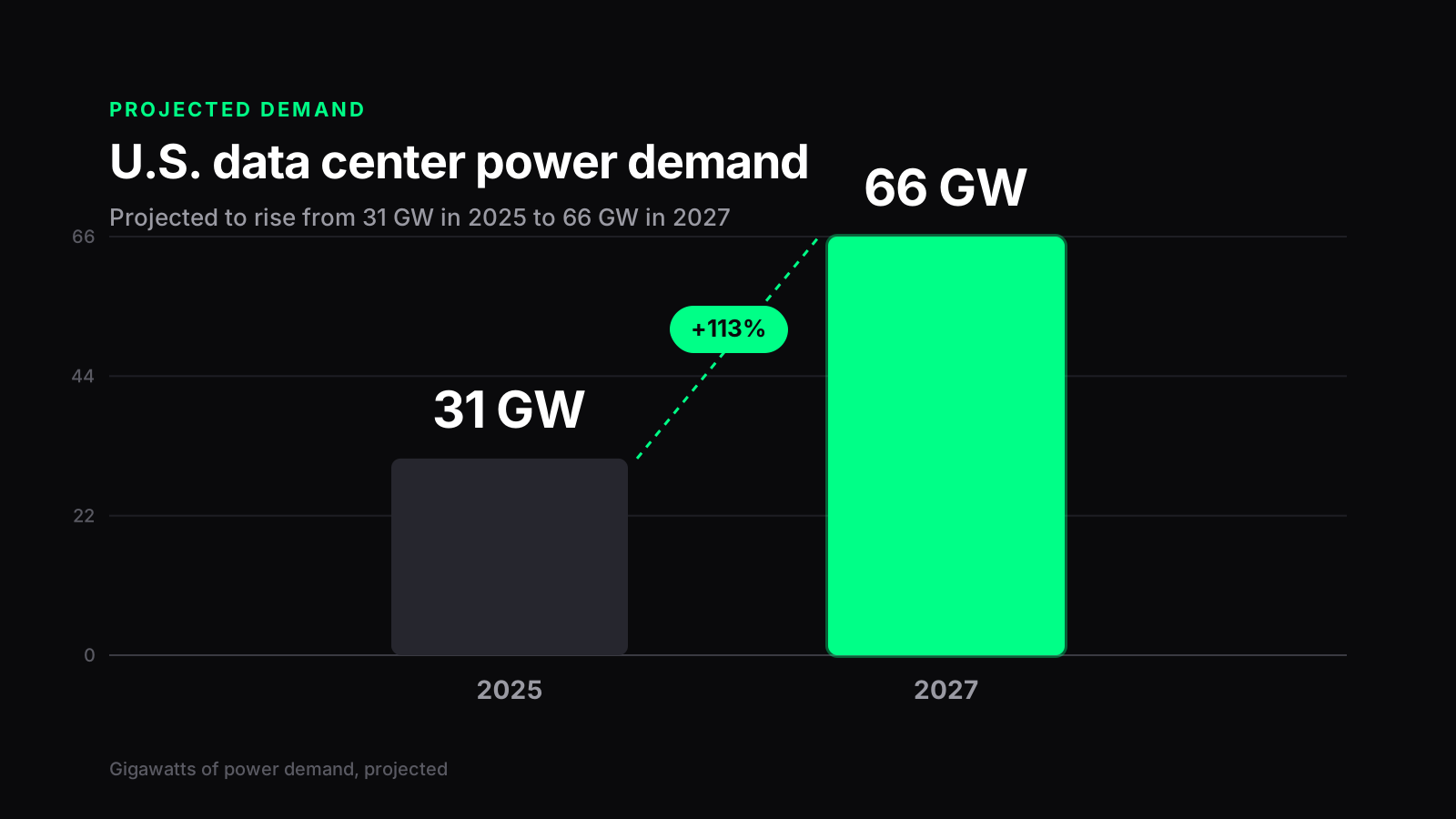
U.S. data center power demand is projected to rise from 31 GW in 2025 to 66 GW in 2027.
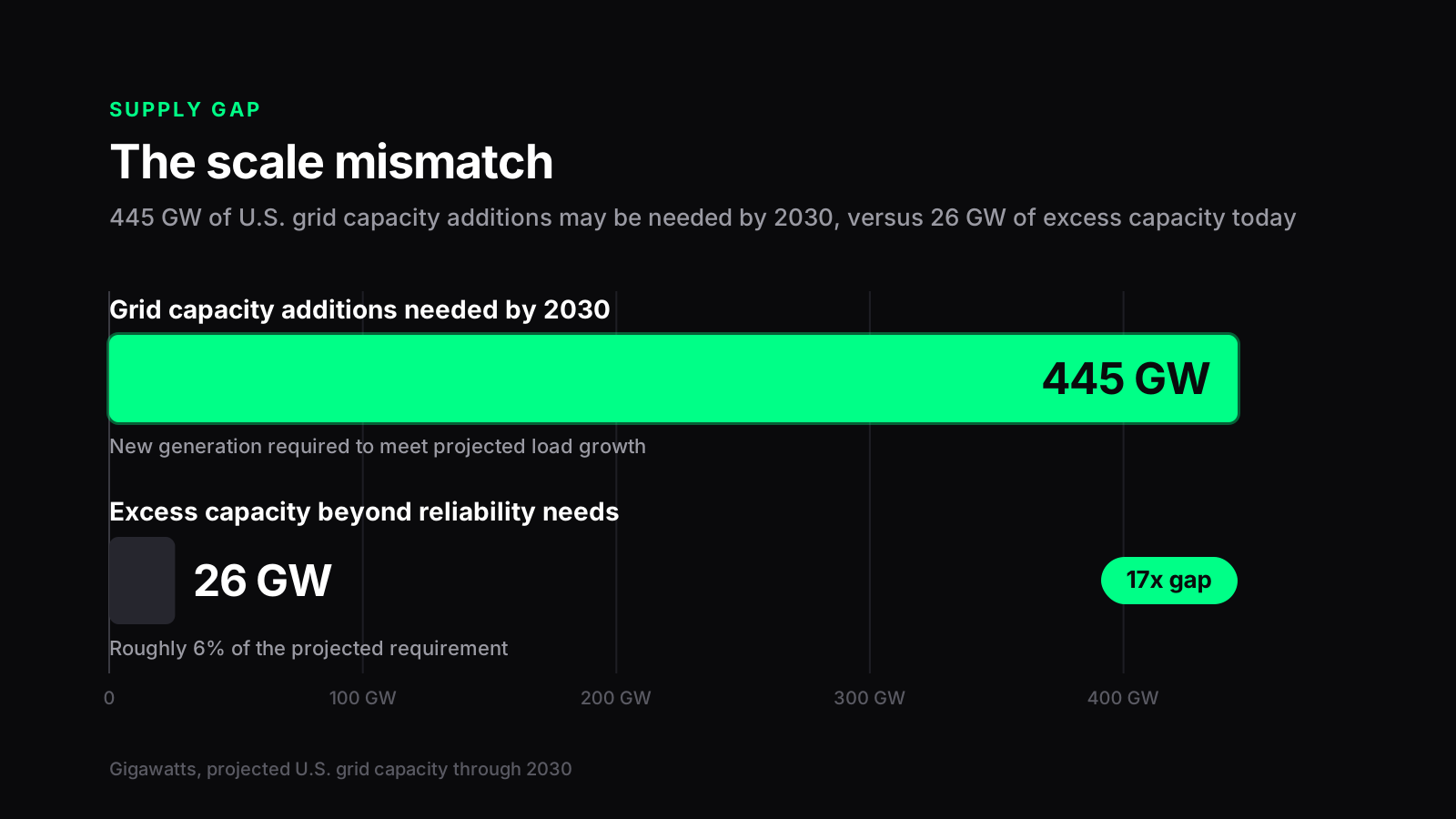
The scale mismatch is stark: 445 GW of U.S. grid capacity additions may be needed by 2030, versus only 26 GW of excess capacity beyond reliability needs.
Capital is moving upstream toward power infrastructure
A major signal in the market is the movement of capital toward power infrastructure and power development.
Reuters reported that data center investors are acquiring power developers to accelerate deployment. DigitalBridge’s planned $1.1 billion acquisition of ArcLight Capital is one example. ArcLight develops and acquires gas-fired, solar, wind and battery storage assets. Reuters also reported that Advanced Power, acquired by ArcLight in 2025, had 12 GW of assets under development.
The strategic implication is that investors are seeking greater influence over the constraints that determine whether AI infrastructure can come online.
The Financial Times reported that U.S. power and utility sector M&A reached $203.6 billion in the first five months of 2026, already more than 40% higher than the total for all of 2025. The same report said data center investment reached $151.5 billion over the same period, more than double the equivalent period a year earlier.
This activity suggests a shift in how the market defines competitive advantage. Site control, design quality and construction capacity remain essential, but they are increasingly insufficient without upstream infrastructure control and visibility.
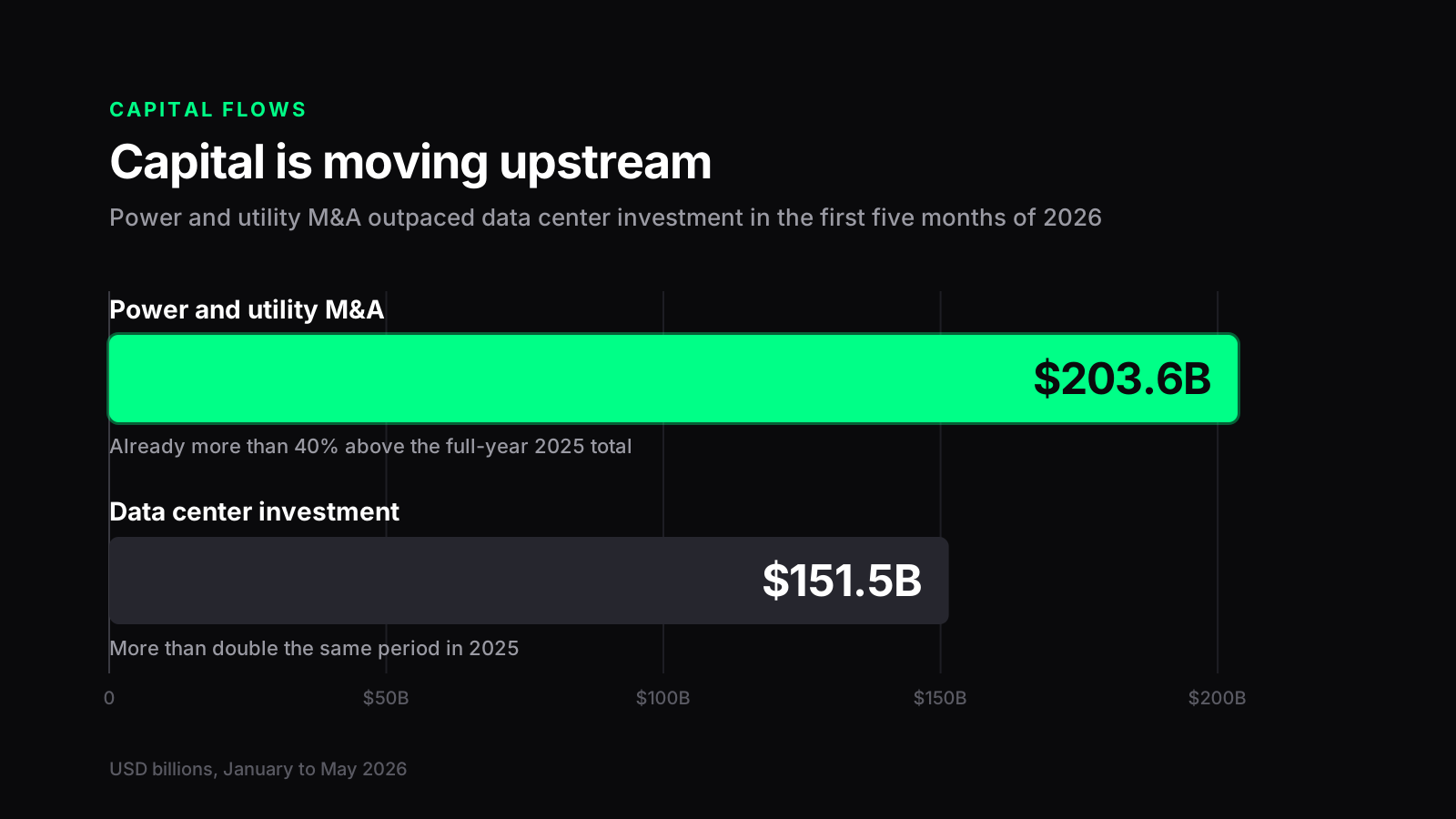
Power and utility M&A reached $203.6B in the first five months of 2026, compared with $151.5B in data center investment during the same period.
Data center campuses are becoming integrated infrastructure systems
Dedicated power deals provide a clear example of how the delivery model is changing.
Reuters reported that Chevron is developing Project Kilby, a dedicated natural gas power facility for Microsoft’s Pecos, Texas data center campus. The project is expected to supply 2.67 GW and deliver power by 2028.
This points to a broader trend: data center campuses are increasingly functioning as integrated infrastructure systems. Energy strategy, compute demand, procurement, construction execution and logistics are becoming more tightly connected.
For project executives and delivery teams, this creates a new management challenge. If power, procurement, logistics and field readiness are interdependent, then managing these functions through disconnected systems introduces additional risk.
The project operating model needs to reflect the integrated nature of the infrastructure being delivered.
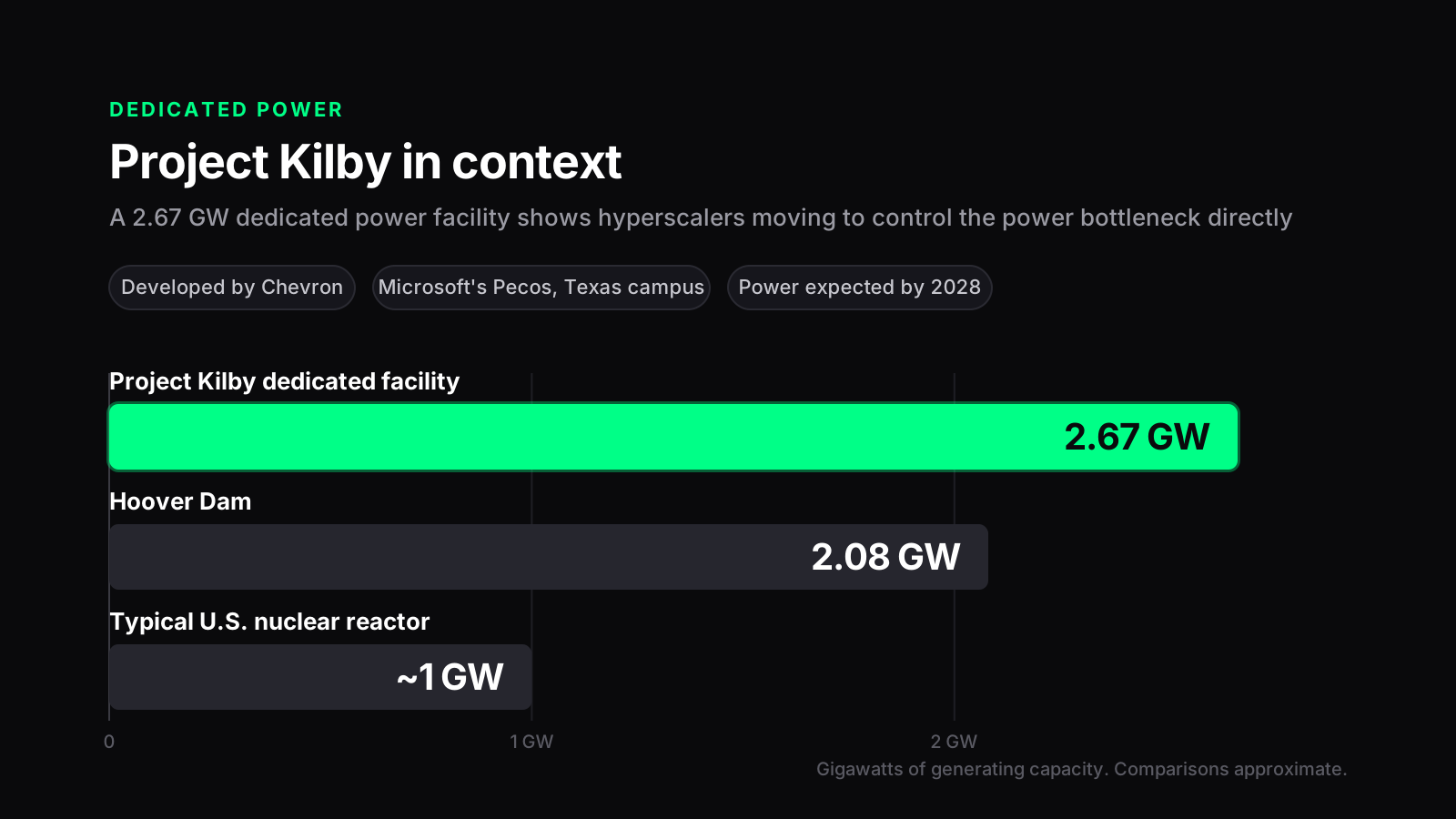
Caption: Project Kilby’s 2.67 GW dedicated power facility shows how hyperscalers are trying to control the power bottleneck directly.
Electrical procurement is becoming a board-level delivery risk
The power constraint is also an equipment constraint.
Reuters Open Interest reported that since 2019, transformer prices have risen 89%, while wire and cable prices have risen 152%. These increases indicate structural pressure in the electrical supply chain, rather than ordinary procurement volatility.
For owners and contractors, long-lead electrical equipment can no longer be treated as a downstream purchasing function. Transformer, switchgear, wire and cable availability now carry direct implications for cost certainty, schedule performance and project viability.
This makes procurement visibility an early-warning system. Delays in long-lead electrical gear often surface upstream, before their impact becomes visible in the field schedule.
Project controls need to reflect this reality. Procurement status, vendor updates, logistics milestones and field-readiness signals should be connected to the schedule early enough for teams to act.
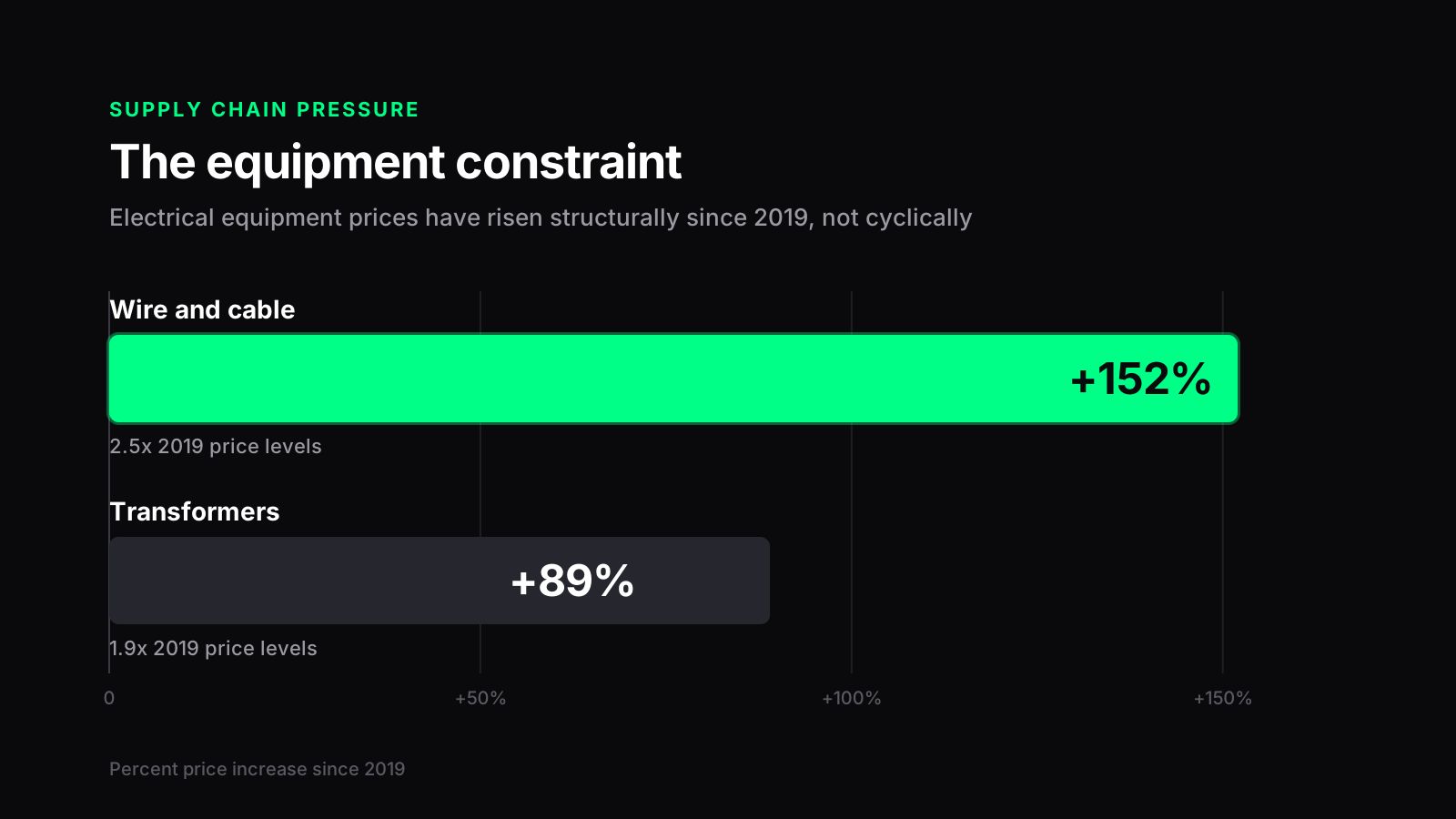
Transformers are up 89% and wire/cable is up 152% since 2019, turning electrical procurement into a board-level delivery risk.
Cooling, labour and public permission are part of the same risk environment
Although power is the most visible constraint, it is not the only upstream risk affecting data center delivery.
Cooling strategy is becoming more important to project acceptance and long-term operating viability. The Verge recently reported on Nvidia’s Rubin liquid-cooled reference design, which is intended to run hotter and reduce reliance on traditional cooling towers. Vendor claims should be evaluated carefully, but the direction of travel is clear: cooling decisions increasingly affect water use, sustainability positioning and local acceptance.
Labour capacity is another constraint. Data center construction relies on specialist trades, including electricians, high-voltage technicians and HVAC specialists. In a constrained labour market, coordination failures become more expensive because there is less slack in the system.
Public permission is also moving closer to the delivery schedule. Concerns around water, noise, heat, land use and electricity costs can create project risk before a formal construction delay appears.
For high-performing teams, these issues should not be managed as isolated workstreams. They are part of the same delivery risk environment.
The emerging requirement: connected upstream visibility
The central implication for the industry is that mission-critical delivery now requires earlier and more connected visibility into upstream risk.
The next generation of data center project controls will need to track more than cost and schedule. It will need to connect:
- Power availability
- Utility queues
- Long-lead equipment
- Procurement status
- Vendor signals
- Logistics milestones
- Cooling and water considerations
- Labour readiness
- Permitting and public-acceptance risk
- Field schedule impact
This represents a different operating model from spreadsheets, email chains and disconnected vendor updates.
AI-native project delivery is commercially relevant in this environment because the value is not automation alone. The value is the ability to detect and connect risk signals before they become field delays.
Conclusion: the critical path has moved upstream
The AI infrastructure boom is exposing a new delivery reality for mission-critical construction.
The risks that determine schedule performance increasingly begin before the jobsite can see them: power rights, utility queues, transformer availability, cooling strategy, public acceptance, labour capacity and vendor signals spread across fragmented systems.
These factors form the invisible critical path behind the AI data center boom.
The teams best positioned to deliver will be those that can connect upstream procurement, power, logistics and field-readiness signals into one operating view early enough to act.
Kaya AI perspective
Mission-critical construction needs an operating layer that connects procurement, vendor signals, logistics and field schedules into one shared view.
The goal is not additional reporting. The goal is earlier visibility into the upstream risks that can break the critical path.
In the AI data center boom, stronger delivery performance will depend on coordinating the invisible layer before it becomes a visible delay.
Bring upstream procurement and delivery risk into one operating view before it reaches the jobsite.